Press Record, Press Restart: How the Celebrity Podcast Apology Became the Most Expensive Free Content on the Internet
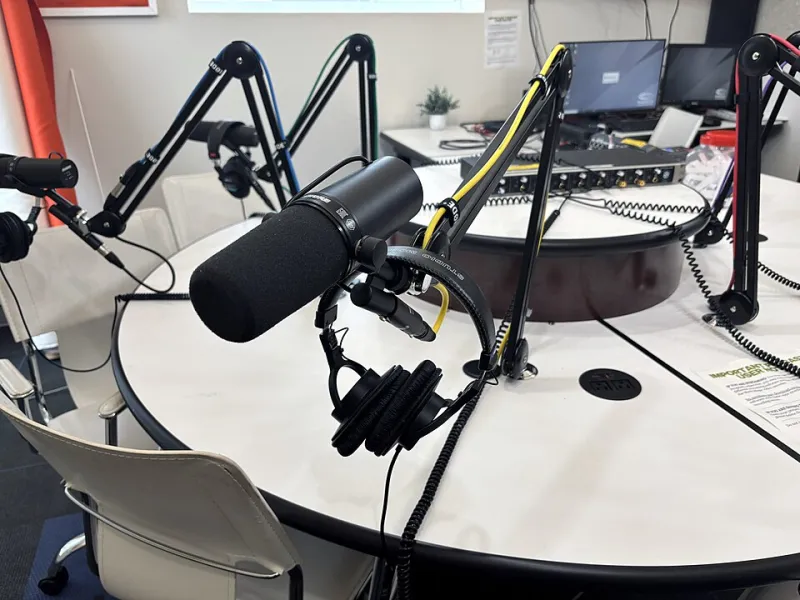
Photo: Myotus, CC BY 4.0, via Wikimedia Commons
Let's set the scene. A celebrity has just survived the internet's wrath — a viral moment, a resurfaced clip, a lawsuit, a public implosion of some variety. The initial dust has settled. Their Instagram has gone quiet. Their publicist has issued one of those statements that says everything and nothing simultaneously. The news cycle has moved on, but the search results haven't.
And then — right on schedule — comes the podcast.
Not a statement. Not a sit-down with a journalist who might ask a follow-up question. A podcast. Comfortable, intimate, unedited (or at least performing unedited), and hosted either by a friendly face who would sooner eat their microphone than challenge a guest, or — in the premium redemption package — the celebrity's own show, where they control the room entirely.
Welcome to the Celebrity Podcast Apology Industrial Complex. Population: growing rapidly.
The Format That Ate the Press Tour
There was a time when celebrities in crisis had limited options. You did Barbara Walters. You did Oprah. You did a carefully worded statement that your lawyer reviewed seventeen times. If things were really bad, you checked into somewhere scenic and emerged three months later with a vague announcement about 'taking time for yourself.'
But the media landscape has shifted dramatically, and the podcast — intimate, long-form, largely unregulated — has emerged as the preferred rehabilitation vehicle for celebrities navigating reputational damage. And the reasons are pretty transparent once you look at them directly.
First: length. A podcast episode can run two hours. Two hours is enough time to reframe an entire narrative, provide context that a headline can never accommodate, and make the listener feel like they're hearing the real story — the one the media supposedly suppressed. By the time the episode ends, the listener has spent more time with this celebrity's perspective than they have with any of the original reporting.
Second: tone. Podcasts are conversational. They're cozy. You're listening through headphones, often alone, often while doing something else. The parasocial intimacy of the format makes the celebrity feel accessible and human in a way that a prepared statement simply cannot replicate. When someone is crying into a microphone about how hard the last year has been, it lands differently than a tweet.
Third — and this is the one nobody talks about enough — control. A podcast appearance with a friendly host, or a self-produced show, is not journalism. There's no adversarial dynamic, no obligation to address specific allegations, no editor fact-checking the timeline. The celebrity can say 'I've addressed this and I'm moving forward' and the host will nod and pivot to something warmer. Try doing that on 60 Minutes.
The Friendly Host Ecosystem
Not all podcast appearances are created equal, and the celebrity redemption tour has developed a fairly reliable cast of characters on the hosting side.
There are the 'no bad questions' hosts — largely fellow celebrities or influencers who built their audience on access and aren't about to jeopardize that by pressing a guest on specifics. Their episodes feel like a long hug. Their listeners are already fans of the guest. The reach is real, but the scrutiny is approximately zero.
Then there are the 'I'll give you the platform to explain yourself' hosts — journalists or commentators who position the appearance as accountability while still fundamentally allowing the celebrity to control the narrative. These episodes feel more credible and often generate more press coverage, but the tough questions tend to get answered with 'that's a really good question, and what I've learned is—' before pivoting elegantly to a rehearsed talking point.
And then there's the self-produced show, which is the nuclear option. No host to challenge you. No editor to flag inconsistencies. Just you, your producer (who you pay), and a microphone. Several high-profile celebrities have launched their own podcasts in the immediate aftermath of controversy — and while the shows are framed around broader themes (wellness, creativity, 'real conversations'), the first few episodes almost always contain a thinly veiled address to The Situation.
'I've never been able to tell my story on my own terms,' is a sentence that has been spoken, in various forms, on approximately forty-seven celebrity podcast launches. The irony that they are now literally telling their story on their own terms, on their own show, on their own timeline, seems to escape the framing every single time.
Does It Actually Work?
This is the question worth asking, and the answer is: sometimes, and it depends entirely on what 'work' means.
For rebuilding a core fanbase that was already inclined to forgive? Absolutely. A well-produced podcast series that humanizes a celebrity and offers a compelling personal narrative can absolutely consolidate support among existing fans and bring back the persuadable middle. The format rewards patience and intimacy, and fans who invest two hours in an episode often come out feeling closer to the subject than before.
For actually changing the minds of critics or shifting mainstream media coverage? Much less reliably. Entertainment journalists and cultural critics who were skeptical before the podcast tend to remain skeptical after it — and often the podcast itself becomes a new story, covered with headlines like 'So-and-So's Podcast Addresses Controversy — But Critics Say It Raised More Questions Than Answers.' Which, to be fair, is still coverage. And coverage is the point.
For launching an entirely new phase of a career? Here's where it gets interesting. Several celebrities who were written off by the traditional entertainment industry have used the podcast format to build entirely new revenue streams — sponsorships, live events, Patreon tiers, book deals spun out of conversations. The redemption arc and the business pivot happen simultaneously, which is genuinely clever.
The Listener Knows What's Happening (And Listens Anyway)
Perhaps the most fascinating element of the celebrity podcast apology era is that the audience is largely aware of the mechanics. Listeners know this is a controlled environment. They know the host isn't going to ask the hard question. They know the emotional moments have been workshopped. And they tune in anyway.
Because at the end of the day, the podcast offers something that a press release never could: the feeling of access. The sense that you, the listener, are getting something real. Even if everyone knows it's curated, the format creates enough warmth and intimacy that the critical brain quiets down just enough for the narrative to land.
That's not manipulation, exactly. But it's not nothing, either.
The celebrity podcast apology isn't going anywhere — if anything, it's getting more sophisticated, more produced, and more strategically timed. The only question now is whether the format eventually becomes so associated with damage control that it loses its credibility entirely.
At which point, presumably, they'll invent something new — and we'll all tune in to watch.