The Ghost in Every Lyric: How a Single Breakup Can Haunt a Celebrity's Entire Career — And Why We're Kind of Obsessed With It
The Ghost in Every Lyric: How a Single Breakup Can Haunt a Celebrity's Entire Career — And Why We're Kind of Obsessed With It
At some point, the breakup album stopped being enough. It used to be a relatively contained transaction: relationship ends, artist processes grief through music, fans receive a very good record, everyone moves on. Clean, almost tidy. But somewhere in the last decade or so, something shifted. The breakup stopped being a chapter and started being a cosmology — a foundational event so seismic that it doesn't just produce one album, it produces an entire artistic identity, an aesthetic, a fan mythology, and an interview persona that the artist carries with them for years, sometimes long after they've technically moved on.
The ex doesn't get named. They don't need to be. They're already everywhere.
When a Split Becomes a Signature
The most commercially successful version of this phenomenon is Taylor Swift, and it would be journalistic negligence not to start there. Swift's relationship with Jake Gyllenhaal produced Red in 2012 — an album that was successful, beloved, and then became something else entirely when Red (Taylor's Version) dropped in 2021 and a decade's worth of fan investigation into "All Too Well (Ten Minute Version)" exploded into a genuine cultural event. Gyllenhaal, who had presumably moved on with his life, suddenly found himself the subject of international discourse, a scarf meme, and a protest outside his apartment.
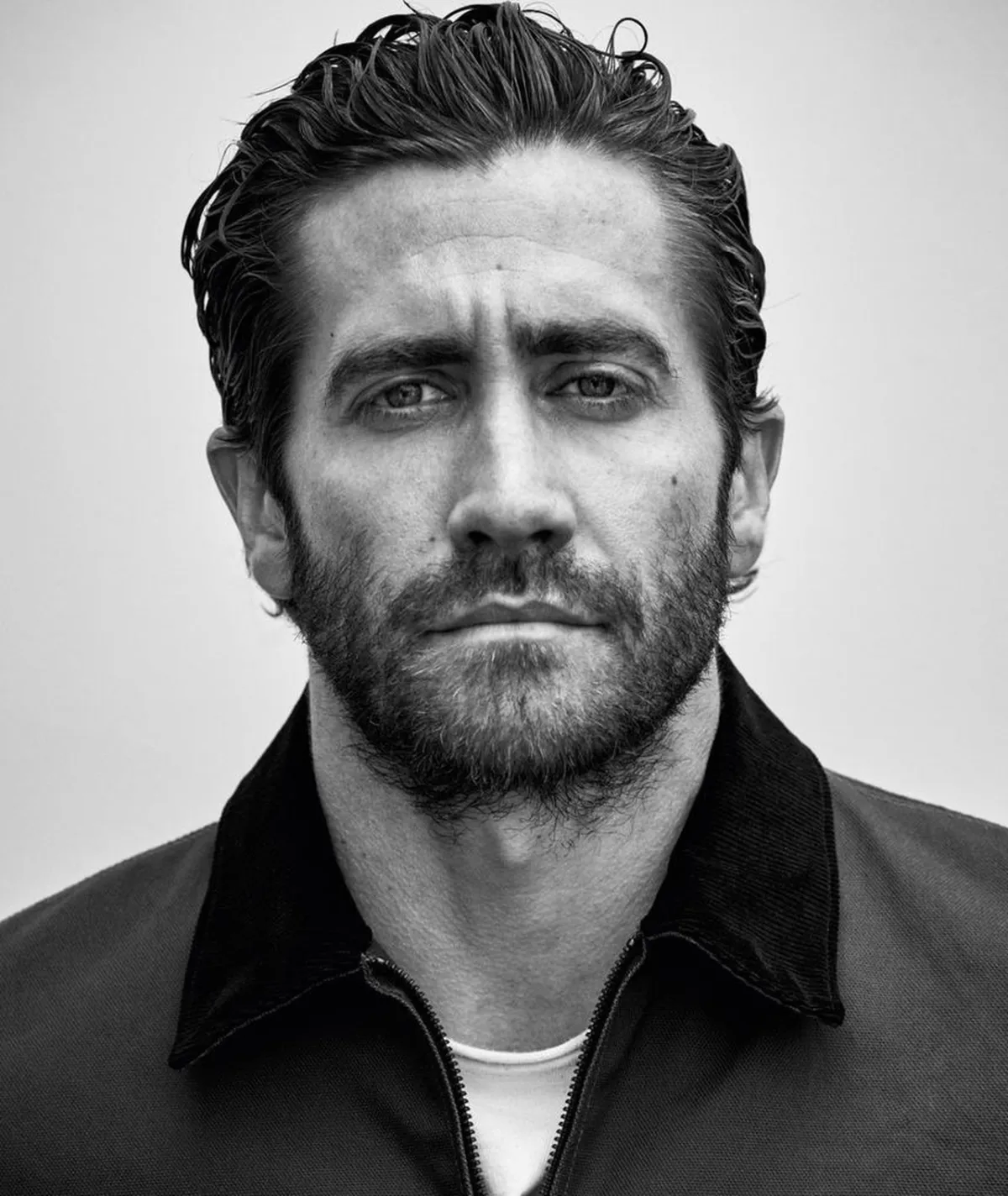 Photo: Jake Gyllenhaal, via images.mubicdn.net
This is the extreme version. But Swift's catalog more broadly illustrates the dynamic: each relationship has left a sedimentary layer in her artistry that fans can trace, argue over, and return to. The exes aren't incidental to the work. They are the work, structurally, whether they consented to that role or not.
She is not alone in this. Not remotely.
The Psychology of the Permanent Ex
Why does this happen? Why do some breakups calcify into career-defining events while others are processed and released?
Part of the answer is simply timing. A split that coincides with a pivotal creative period — a debut album, a major stylistic transition, a moment when the artist is searching for something to say — tends to leave deeper marks than one that happens mid-career when the artistic identity is already established. The wound and the work fuse together, and the result is something with a rawness that audiences recognize and respond to viscerally.
But there's also a commercial dynamic worth being honest about. Romantic trauma sells. It sells because it is universal — almost everyone has loved someone who left, or left someone who loved them, and the specificity of great heartbreak art somehow makes it more universal rather than less. When Olivia Rodrigo wrote drivers license, she was writing about a very specific situation involving very specific people. But the feeling it captured was one that a generation of listeners claimed entirely as their own. The personal becomes the communal becomes the commercial. It's a remarkable alchemy.
The Artists Who Built Empires on Heartbreak
Beyond Swift, a few artists have leaned into this dynamic with particular commitment.
Adele's entire public image is inseparable from romantic grief, even as her actual relationships have evolved significantly. 21, 25, 30 — each album is essentially a chapter in an ongoing emotional autobiography, and the audience has developed an almost parasocial investment in her romantic life that far exceeds normal celebrity interest. When 30 arrived, the anticipation wasn't just musical — it was narrative. What happened? Who was it? What did it feel like? The album answered those questions in extraordinary detail, and then the fans went to work filling in every gap.
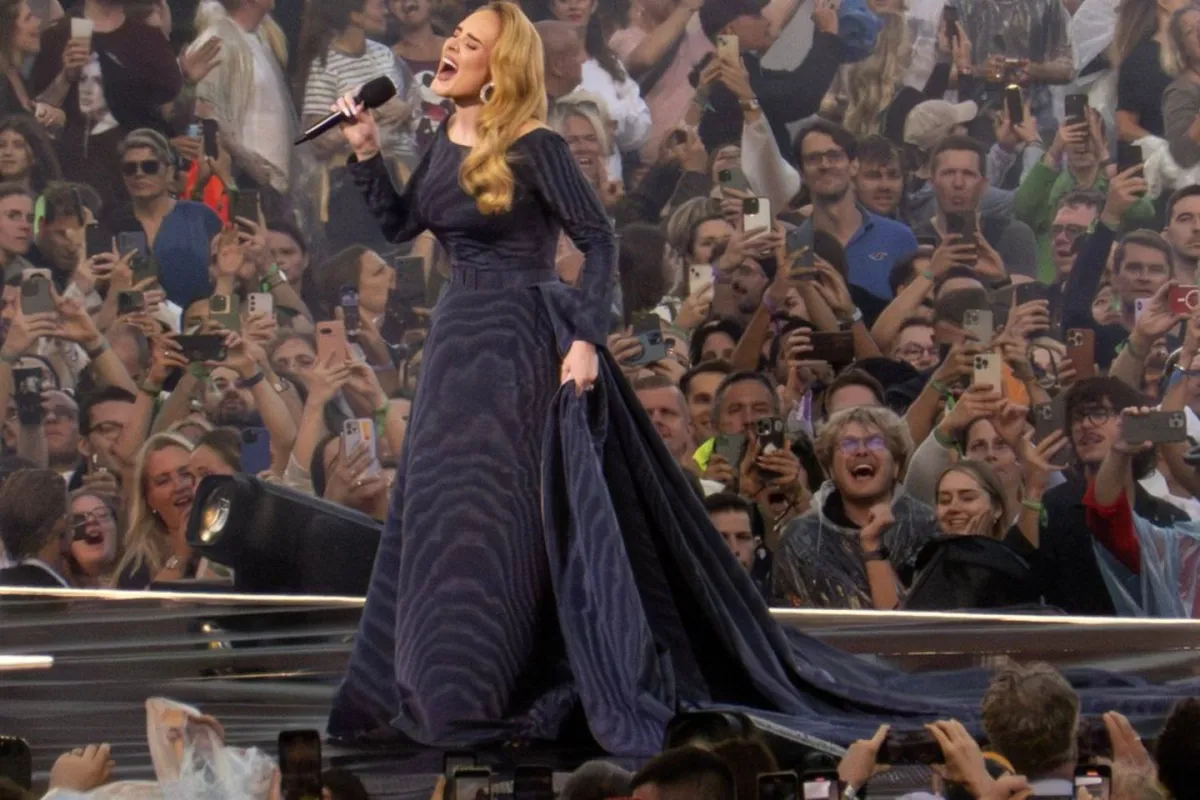 Photo: Adele, via image.gala.de
Ariana Grande's relationship history has similarly become a lens through which her music is almost unavoidably interpreted. The Pete Davidson era — brief, chaotic, very publicly ended — produced thank u, next, which is arguably the most efficient processing of a breakup in pop music history: the relationship ended, the song dropped, the meme was born, and the entire thing became a cultural shorthand within weeks. More recently, the dissolution of her marriage to Dalton Gomez and the beginning of her relationship with Ethan Slater (her Wicked co-star) generated a level of public scrutiny that has visibly shaped how she presents herself and what she's willing to discuss publicly.
SZA, whose SOS became one of the biggest albums of 2023, has spoken in interviews about the way romantic loss permeates her creative process almost involuntarily. "I think I process things through music before I even know I'm processing them," she told one interviewer — which is perhaps the most honest articulation of this dynamic any artist has offered.
The Ex's Perspective (Which Nobody Really Asks About)
Here is the part of this conversation that gets uncomfortable: the ex is a real person.
In the fan ecosystem around heartbreak-driven celebrity art, the unnamed subject of the songs tends to be treated as either a villain or a plot device — rarely as a human being who may have their own entirely valid account of what happened and who did not sign up to become a recurring character in someone else's artistic mythology.
Jake Gyllenhaal addressed this, obliquely and somewhat awkwardly, in a 2023 interview with Esquire — one of the rare instances where an ex has publicly responded to being the subject of sustained fan interpretation. The experience of watching strangers dissect your relationship based on song lyrics, he suggested, was disorienting in ways that were difficult to articulate. This is not a defense of anyone's behavior. It is simply a reminder that the ghost in the lyric was once a person in a relationship, and relationships are almost always more complicated than the song.
The Commercial Genius of Never Quite Moving On
Let's acknowledge what the music industry has clearly already figured out: an artist who is perpetually in conversation with their romantic past has an almost inexhaustible content engine. Every new relationship is measured against the mythology. Every new album is decoded for references. Every interview becomes a detective game.
This is extraordinarily good for streaming numbers, for concert ticket sales, for social media engagement, and for the kind of sustained fan investment that keeps careers alive between release cycles. The audience isn't just listening to the music — they're participating in an ongoing narrative. That participation is deeply, commercially valuable.
Whether the artist is consciously engineering this dynamic or simply living their life and making work about it is a question that varies by case and probably can't be answered definitively from the outside. What's clear is that the industry has learned to recognize and amplify it when it exists.
What Happens When the Story Runs Out
Every mythology eventually needs to evolve. The artists who have navigated this most successfully are the ones who found a way to expand the emotional territory — to make the heartbreak chapter feel complete without abandoning the emotional honesty that made it resonate. Swift's Midnights and The Tortured Poets Department represent an attempt to complicate and deepen the romantic mythology rather than simply repeat it. Whether that expansion works artistically is a matter of taste. That it was necessary, commercially and creatively, is not really in question.
The ghost in the lyric can only haunt for so long before the audience starts wanting it to either materialize fully or disappear entirely.
And if history is any guide, the artist who figures out which one to do — and when — will probably have their best album yet waiting on the other side of that decision.