Tiny Influencers, Big Business: The Uncomfortable Truth About Celebrities Building Empires on Their Kids' Cuteness

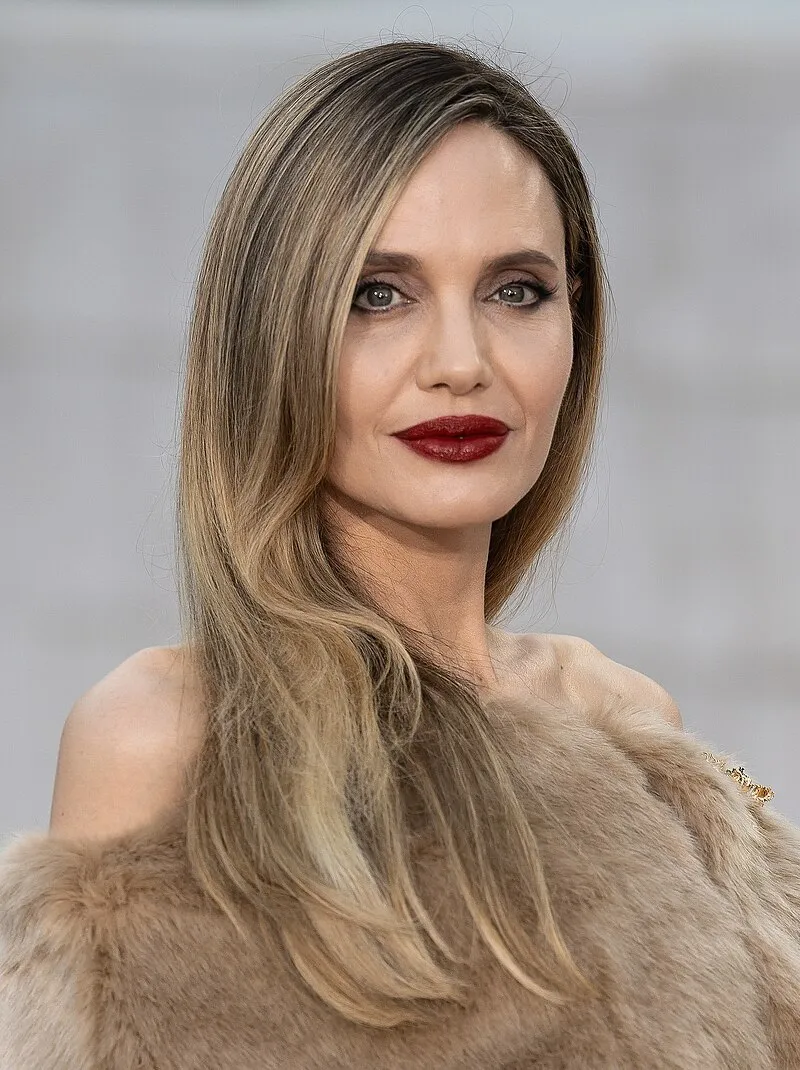
Photo: Photograph by Brian Hankins, Public domain, via Wikimedia Commons
There is a particular kind of Instagram post that performs extraordinarily well. It features a celebrity parent — usually looking casually gorgeous in natural light — alongside a small child who is doing something unremarkably adorable: laughing at nothing, holding a snack with both hands, wearing an outfit that costs more than most people's car payments. The caption is warm and vague. The tags include at least two brand partners. The comments are a tsunami of heart emojis.
This post will outperform almost everything else on that celebrity's feed. And somewhere in a marketing meeting, someone is taking very detailed notes.
Welcome to the celebrity family content era — where children are the most powerful engagement tool a parent-influencer has, the ethical questions are multiplying faster than the follower counts, and Gen Alpha is being quietly drafted into a brand war they're far too young to understand.
From Occasional Glimpse to Full-Time Content Strategy
It didn't happen overnight. For years, the celebrity standard around children was relatively protective — a glimpse here, a birthday photo there, faces occasionally blurred or cropped. The prevailing attitude, at least publicly, was that children deserved a boundary their famous parents had voluntarily surrendered.
That boundary has been eroding steadily, and in the social media economy of the last five years, it has largely collapsed.
What replaced it is the family content franchise. This isn't a single post or a holiday snapshot — it's a content vertical. Regular appearances, recurring features, branded segments, merchandise tie-ins, and in some cases, dedicated social accounts managed by parents on behalf of children who are still years away from being legally old enough to operate them independently.
The business logic is ruthless in its clarity: celebrity children generate engagement that adult celebrity content simply cannot match. They are novel, they are cute, they are perceived as 'authentic' in a media landscape where authenticity is the scarcest commodity. And crucially, they cannot push back on the strategy.
The Monetization Playbook
The ways in which celebrity children are being folded into parent brands are varied and increasingly sophisticated.
At the most visible end, there are the family brand deals — clothing lines, toy partnerships, children's food and wellness brands — where the child's image is central to the marketing material. The parent signs the deal. The child appears in the campaign. The child receives no compensation, no creative control, and no say in whether their face is associated with a product they'll eventually be old enough to Google.
Then there's the content-native approach, where celebrity children appear regularly across a parent's social channels in a way that's positioned as organic family sharing but is structurally indistinguishable from influencer content. The child becomes a recurring character in the parent's personal brand story — their milestones, their funny moments, their first-day-of-school photos — all packaged and posted to audiences in the millions.
Beyond that, several celebrity families have moved into dedicated family content channels on YouTube, TikTok, and Instagram, where the children are not incidental to the content but central to it. These channels, when they perform well, generate substantial advertising revenue. The children are, functionally, the talent. The parents are the producers.
And the numbers are significant. Family content channels in the celebrity space can command sponsorship rates that rival traditional media placements. A single sponsored post featuring a celebrity parent and child can generate six figures. A multi-post campaign can generate considerably more. The children are not paid. The children are not represented. The children are, legally and practically, assets being managed by their parents.
The Fan Obsession Nobody Talks About Honestly
There's another side of this equation that deserves examination: the audience.
Celebrity children have developed their own fan communities — dedicated accounts, compilation videos, fan edits, and in some cases, deeply invested parasocial relationships between adult strangers and children they follow online. This is not a fringe phenomenon. Some celebrity children have fan accounts with hundreds of thousands of followers before they're old enough to attend elementary school.
Most of these fan communities are entirely benign — people who simply find celebrity children charming and enjoy following their development. But the infrastructure of celebrity child fandom creates a feedback loop that incentivizes parents to post more, share more, and document more. The demand exists, and the platform rewards meeting it.
The uncomfortable reality is that the audience's appetite for celebrity child content is part of what makes the monetization so lucrative — and part of what makes it so difficult to critique without implicating the fans themselves.
The Consent Problem That Everyone Is Quietly Ignoring
Here is the question that the industry has not answered, and that lawmakers in most U.S. states have barely begun to address: at what point does a child's right to privacy and self-determination override a parent's right to manage their own public platform?
Children cannot meaningfully consent to being public figures. They cannot evaluate the long-term implications of having their childhood documented, monetized, and distributed to millions of strangers. They cannot opt out of a brand deal their parent signed on their behalf. And in most states, they have no legal right to any portion of the revenue generated by content in which they are the primary draw.
California has made some legislative moves in this space — there are now provisions requiring that a portion of earnings from content in which a minor is a featured performer be set aside in a trust. But enforcement is limited, definitions are contested, and the law has not kept pace with the speed at which the creator economy has evolved.
Some celebrity parents have been vocal about the steps they take to protect their children — limiting what they share, avoiding identifying information, giving older children veto power over what gets posted. These are meaningful distinctions, and they matter. But they are voluntary, they are self-reported, and they are not universal.
What Happens When the Kids Grow Up
The generation of children currently being raised in the frame of their parents' content empires will eventually be old enough to have opinions about it. Some will embrace the platform they've inherited — there are already examples of celebrity children who have transitioned seamlessly into their own influencer careers, the family brand extending into a second generation.
Others will not. There are early signals from slightly older celebrity children — now teenagers — who have begun pushing back on their parents' social media presence, asking for more privacy, or simply going conspicuously absent from feeds where they once appeared constantly. These are small, quiet rebellions. But they're worth watching.
Because the children being posted today are the ones who will eventually be old enough to tell their own story — about what it felt like to grow up as content, what they consented to and what they didn't, and what they think about the empire that was built on their early years.
That story is coming. And when it arrives, it will almost certainly generate extraordinary engagement.
The algorithm, as always, will be waiting.