The Memoir That Lied With the Truth: How Celebrity Tell-Alls Became the Most Expensive Nothing in Publishing
Photo: Bull, Sara Chapman Thorp, 1850-1911; Bull, Ole, 1810-1880. Violin notes; Crosby, A. B. (Alpheus Benning), 1832-1877. Anatomy of the violinist, No restrictions, via Wikimedia Commons
Let's set the scene. It's a Tuesday morning. A celebrity you have complicated feelings about announces, via a perfectly lit Instagram post with a carefully chosen font, that they've written a memoir. The cover art is beautiful. The title is evocative. The caption promises something in the neighborhood of "my truth," "the whole story," or "what really happened." Pre-orders open immediately. The publishing industry breathes a collective sigh of relief because this one is going to move units.
And then the book comes out. And you read it. And somewhere around chapter seven — another warmly recalled childhood anecdote, another vague reference to "a difficult period" that the author declines to specify, another paragraph of hard-won wisdom that could have been a Pinterest quote — you realize what's happened. You've been had. Gently, expensively, and with great literary production value, but had nonetheless.
Welcome to the Celebrity Memoir Industrial Complex, where the promise of honesty is the product, and the honesty itself is entirely optional.
The Anatomy of a Non-Revelation
To be clear about what we're not talking about: there are celebrity memoirs that genuinely deliver. Matthew Perry's Friends, Lovers, and the Big Terrible Thing, published in 2022 before his death, was raw, specific, and at times genuinely difficult to read — the kind of book that earned its "tell-all" label because it actually told things. Jennette McCurdy's I'm Glad My Mom Died was a similarly unsparing piece of writing that clearly cost its author something real to produce.
 Photo: Jennette McCurdy, via people.com
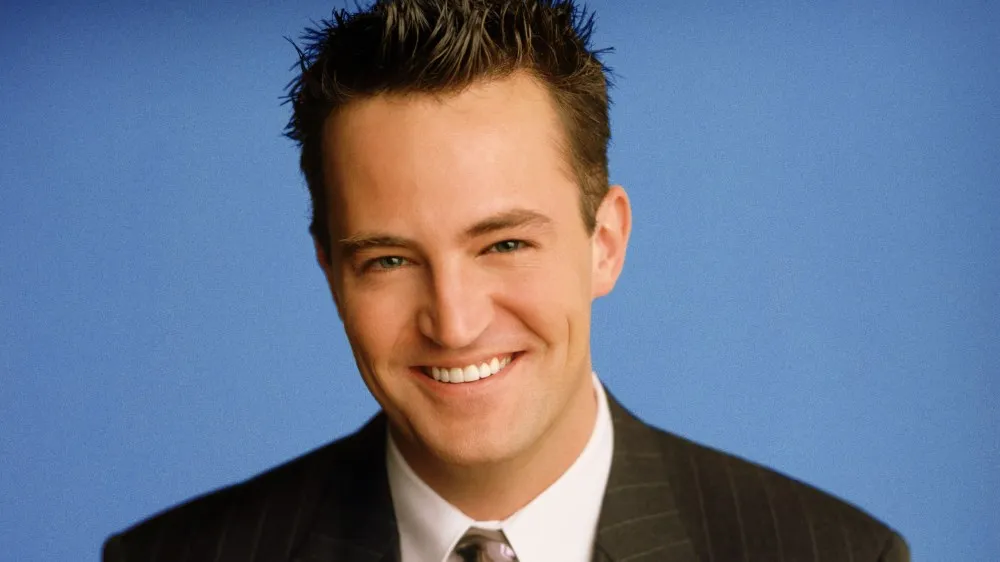 Photo: Matthew Perry, via variety.com
These books exist. They are not the problem. The problem is the much larger category of celebrity memoir that deploys the aesthetic of honesty — the confessional tone, the therapy-speak, the occasional tear-adjacent prose — while carefully ensuring that nothing in its pages could damage a relationship, terminate a contract, or generate a response from a legal team.
The tell-all that tells nothing has a recognizable signature. It acknowledges hardship in broad strokes while declining to name names. It describes formative relationships with suspicious vagueness. It offers "lessons learned" from experiences that are never quite specific enough to be verified or challenged. It is, in the most precise sense of the phrase, carefully worded.
The Publisher-Publicist Collusion
Here's how the machine works, and it's worth understanding because it's genuinely elegant in its cynicism.
A celebrity with sufficient cultural cachet approaches a publisher — or more accurately, their management team approaches a publisher — with the concept of a memoir. The publisher, whose business model has been under existential pressure for years and who knows that a celebrity memoir with sufficient name recognition can anchor an entire quarterly catalog, makes an offer. Sometimes a very large offer. The advance generates its own news cycle, which functions as the first wave of marketing.
The celebrity's publicist is then involved — sometimes formally, sometimes informally — in the shaping of the manuscript. This is the part that doesn't appear in the acknowledgments. The publicist's job is not to help the celebrity be honest. The publicist's job is to protect the celebrity's relationships, reputation, and future earning potential. These goals are not always compatible with a genuinely revealing memoir, and when they conflict, the memoir loses.
The result is a book that has been optimized not for truth but for manageability. Every anecdote has been assessed for blowback potential. Every named individual has been run through a mental calculation of whether the relationship is worth preserving. Every "difficult period" has been sanded down to a level of abstraction that renders it simultaneously relatable and completely uninformative.
The Vulnerability Performance
The most sophisticated version of the non-revelation memoir has added a new layer in recent years: the performance of emotional openness as a substitute for actual disclosure. This is where the therapy-speak comes in.
A celebrity can spend an entire chapter discussing their struggles with self-worth, their fear of abandonment, their complicated relationship with their own success — and reveal precisely nothing about the specific events, people, or decisions that shaped those experiences. The emotion is real, or at least performed convincingly. The content is vapor.
This is a genuinely clever maneuver, because it's almost impossible to criticize without sounding like you're attacking vulnerability itself. Reviewers who note that a memoir contains no actual new information can be dismissed as demanding too much, as being uncharitable to someone who is "bravely sharing their story." The emotional register of the book functions as a kind of armor against legitimate critique.
Audiences, to their credit, are increasingly calling this out. Goodreads reviews — which function as one of the more honest barometers of reader response, given their relative distance from publicist influence — frequently surface the same complaint across multiple high-profile celebrity memoirs: I felt like I was reading a very long press release written in the first person.
The Pre-Order Hype Cycle
One of the more reliable tells that a celebrity memoir is going to deliver nothing is the intensity of its pre-publication hype. When a publisher and a celebrity's team are genuinely confident in the material, they tend to let excerpts do the talking. When they are not, the marketing machine goes into overdrive — profiles, podcast appearances, carefully staged "candid" interviews in which the celebrity discusses how hard it was to write this book and how exposed they feel.
The exposure, notably, rarely extends to the actual content. The celebrity discusses the process of writing with great emotional specificity while remaining almost entirely vague about what they actually wrote. This is not an accident. It is a strategy for generating maximum pre-order momentum while minimizing the risk that any specific revelation will generate controversy before publication.
By the time the book lands and readers begin to note the gap between the promise and the product, the first-week sales numbers are already in. The advance has been earned out, or it hasn't, but either way the publisher has moved on to the next quarter. The celebrity has the "author" credit they wanted. Everyone has technically gotten what they came for, except the reader.
Are Fans Finally Catching On?
The short answer is yes, and the longer answer is: it depends on the celebrity.
For stars with deeply loyal fanbases — the kind of fans who will purchase and defend anything their favorite releases — the non-revelation memoir remains a reliable revenue stream. The purchase isn't really about the information. It's about participation, about having the object, about supporting the person. These are legitimate reasons to buy a book, even if they have nothing to do with its journalistic value.
But for celebrities whose cultural cachet depends more on perceived authenticity than on parasocial devotion, the math is changing. The backlash to underwhelming memoirs has become its own media cycle — the disappointed review, the viral Twitter thread cataloging what the book failed to address, the Reddit discussion dissecting every careful omission. This secondary coverage can be more damaging to a celebrity's credibility than simply not writing the book at all.
The irony, of course, is that the celebrities who would most benefit from a genuinely honest memoir — whose stories are complicated enough to be genuinely interesting, whose public image has enough rough edges to make real disclosure meaningful — are precisely the ones whose teams are most motivated to sand everything smooth.
The memoir that could actually change the conversation is the one that will never be written. Or if it is written, it'll be sitting in a lawyer's drawer somewhere, generating its own kind of silence.
Save yourself thirty-two dollars: the real story is always the one they decided not to tell.